Skip to content
Free delivery on every order of Shilajit, Saffron & Sidr Honey | Cash on delivery across Pakistan Shop now
Desi Nectar
SIDR HONEY

Does Honey Crystallize in Winter? Why It Happens and What It Means

Honey gone thick and grainy in winter? Why honey crystallizes in the cold, why that doesn't prove real or fake, how Sidr and acacia behave, and how to soften and store it safely.
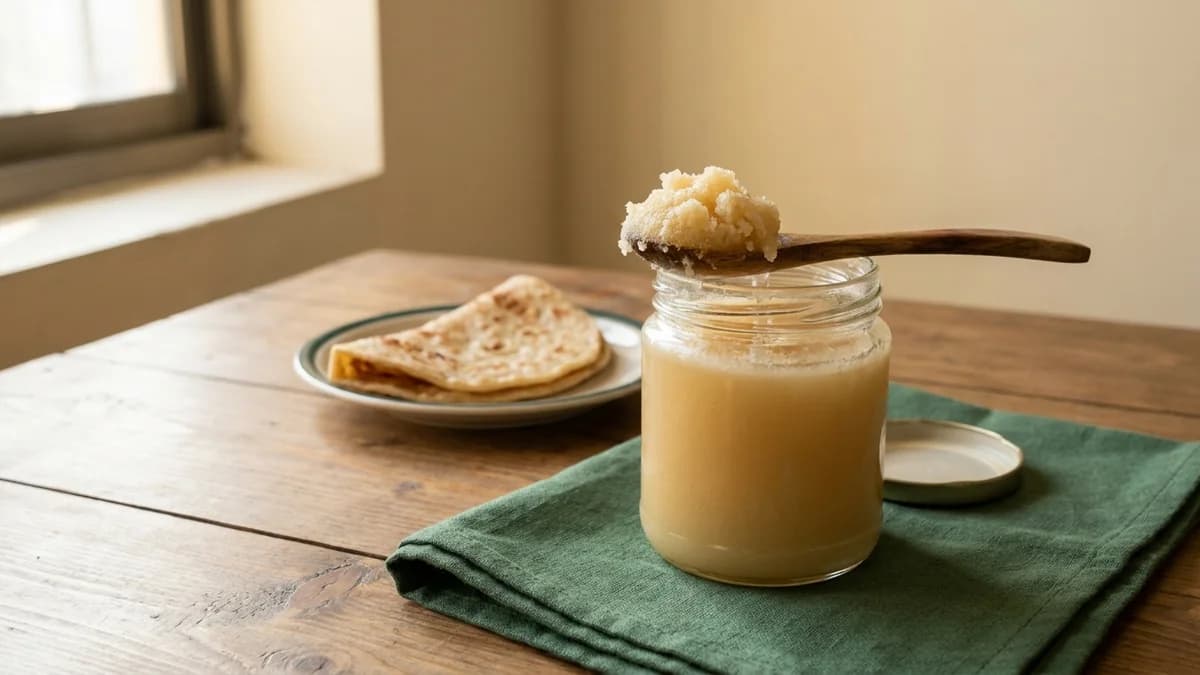
Wooden spoon of pale grainy crystallised honey on an open glass jar

Does honey crystallize in winter? Yes, it can. It turns thick, cloudy or grainy, sometimes so firm that a spoon stands up in it. This is a natural change, not spoilage, and you can soften it again. But crystallizing on its own does not tell you whether honey is real or mixed. Here is why it happens, how to soften it safely, and how to store it.

Key points:

  • Crystallizing is normal. In the cold, some of honey's natural sugar comes out as tiny crystals.
  • It is not a real-or-fake test. Mixed honey can set too, and some real honey stays runny for months.
  • It is reversible. A warm water bath, not boiling water, brings it back.
  • The taste stays the same. Only the texture changes.

Does honey crystallize in winter? The short answer

Yes. Cool weather is the most common reason a jar of honey sets. It does not mean the honey has gone bad or that sugar was added. The honey has simply cooled into the range where its sugars form crystals. Warm it gently and it pours again.

Does honey freeze or crystallize? What is actually happening in the jar

People often say honey "freezes" in winter, but honey has very little water, so it does not freeze solid like water, even in a home freezer. It just becomes very thick.

What you see in winter is crystallization. Honey is mostly two natural sugars, glucose and fructose. Glucose dissolves less easily, so when the honey cools, some glucose separates and forms crystals. Fructose stays liquid. As more crystals form, the honey turns cloudy, then grainy, then firm, and its colour gets lighter, often pale gold or creamy white. That is why many people say it looks like desi ghee.

Set honey does not always look the same:

  • Fine and creamy: smooth and spreadable, like soft butter.
  • Coarse and grainy: larger, sugar-like grains.
  • Partly set: a firm layer at the bottom with runnier honey on top, because crystals are heavier and settle first.

Why honey sets faster in a Pakistani winter

Room temperature and the 10–15°C zone

Honey crystallizes fastest at roughly 10–15°C. An unheated room in Peshawar, Islamabad or Lahore in December and January, especially at night, can easily sit in that range. A jar that stayed runny all summer can set within a few weeks once the cold comes.

The fridge makes it worse

The fridge keeps the jar cold every day, so honey sets faster there than in a cupboard. A closed jar of honey does not need the fridge.

Type of honey, pollen and heating

  • Flower source: honey with more glucose sets faster; honey with more fructose stays liquid longer.
  • Tiny particles: pollen, bits of wax and air bubbles act as "seeds" for crystals. Unfiltered honey usually has more of them, so it may set sooner.
  • Heating and fine filtering: heated or finely filtered honey often stays liquid longer. Staying runny is not, by itself, a sign of better or worse honey.

Does Sidr honey crystallize? Does acacia (palosa)?

  • Sidr (beri ka shahad): it can crystallize. How fast depends on the batch, the flowering season and how cold the room gets.
  • Acacia (babul / palosa): it is generally reported to set slowly, because it has more fructose than many honeys. Slowly does not mean never.

If your Sidr jar sets first, that is normal. For taste, colour and uses, see our Sidr vs acacia honey comparison.

"Asli shahad jam jata hai?" Two myths, one answer

Search "original honey freeze in winter" or "does pure honey crystallize" and you will find two opposite claims. Both are wrong.

  • Myth 1: "Honey that sets is fake or mixed with sugar." No. Setting is a normal property of honey's own sugars.
  • Myth 2: "Real honey always sets, and always from the bottom." Also no. Some real honey stays liquid for months, and honey mixed with syrup can still set. Crystals gather at the bottom first because they are heavier, not because of anything to do with real or fake.

The answer: crystallizing is not a test. It tells you about temperature and sugar balance, not whether a jar is real.

How to soften crystallized honey safely

Warm water bath, step by step

  1. Fill a bowl or pan with warm water, about 40°C or a little below. It should feel warm on your hand, not hot.
  2. Keep the lid on the jar so no water gets in, and stand the jar in the water.
  3. Leave it for 15–30 minutes. Change the water when it cools.
  4. Stir with a clean, dry spoon and repeat until it is as runny as you like.

Warm only what you will use soon; re-warming the same jar many times can change its taste.

Glass jar vs plastic bottle

A glass jar handles a warm water bath well. A plastic bottle can bend in hot water, so use only lukewarm water, or spoon the honey into a clean, dry glass jar first.

What not to do

  • No microwave: it heats unevenly and can scorch the honey.
  • No boiling water or direct flame: too hot for the taste and for plastic.
  • No added water: extra water can make honey ferment later.

You don't have to soften it at all. Set honey spreads well on warm roti, paratha or toast. For a winter drink, stir a spoon into warm (not boiling) kesar doodh, made the way we show in our saffron cooking guide.

Crystals or spoilage? How to tell

  • Crystals: pale or white, grainy or creamy, with a normal smell and taste. Fine to eat.
  • Fermentation: foam on top, a sour or alcohol-like smell, or a fizzy taste. Usually water got in. Don't eat it.
  • Mould: fuzzy or coloured spots on the surface. Throw the jar away.

To avoid both, keep honey dry: a tight lid and a dry spoon every time.

How to store honey in winter so it stays pourable

  • A kitchen cupboard at room temperature, away from a cold window and the stove.
  • Not in the fridge.
  • A glass jar with the lid closed tightly, and a clean, dry spoon.
  • With a large jar, keep a small jar out for daily use and the rest closed.

If you want to check a jar: what home checks can and can't tell you

  • Taste: honey usually has a layered taste, not just plain sugar.
  • Thickness: a drop on your thumb holds its shape, while thin syrup spreads.
  • The label: check the honey type (Sidr or acacia, not just "mixed") and the net weight.
  • The seller: one who answers questions about source and season is a better sign than a big label claim.

These are clues, not proof, and crystallizing is not one of them. Only a food testing lab can confirm what is in a jar. Our Sidr honey guide and the Sidr vs acacia post explain the common checks and their limits.

Sidr and acacia honey from Desi Nectar

Our Sidr honey (beri ka shahad) is sold unfiltered in 1 kg and 500 g glass jars. It is thick, smooth and dark, from wild beri trees in the Karak and Himalayan areas, as stated on our listing. At the time of writing (Oct 2026), the 1 kg jar is Rs 4,200 and the 500 g jar is Rs 2,100.

Our acacia (palosa) honey is light in colour with a mild floral sweetness, for tea and breakfast. At the time of writing (Oct 2026), it is Rs 1,600. Both are unfiltered, so either may crystallize in cold weather; the warm water bath above brings it back. Prices can change, so check the product pages, or browse all honey.

How to order:

  • On the website: add the jar to your basket and pay cash on delivery across Pakistan.
  • On WhatsApp: 0305 5928890. Send the product name, size and your delivery details. WhatsApp orders are entered by our team and get an order number. See how to order on WhatsApp.
  • Payment: cash on delivery, or online payment to our account (ask us on WhatsApp for the details).
  • Delivery charge: please check at checkout, or ask us on WhatsApp. Delivery times are on our shipping and delivery page.

Who should be careful: never give honey to babies under 1 year old. Honey is mostly natural sugar, so keep portions moderate. This is a food product, not a medicine. If you are pregnant, breastfeeding, on medication or have a medical condition, ask your doctor first.

Frequently Asked Questions

Does real honey freeze in winter or not?
It does not freeze solid like water. In the cold it gets thicker and can crystallize, turning cloudy and grainy. A warm water bath makes it runny again.
"Kya asli shahad jam jata hai?"
Yes, it can. Honey sets naturally in cool weather, but setting is not a test of real or fake: mixed honey can set too, and some real honey stays liquid for months.
Should I keep honey in the fridge?
No. The fridge makes honey set faster. A tightly closed jar in a kitchen cupboard at room temperature is enough.
Is crystallized honey still good to eat?
Yes, if it smells and tastes normal and shows no foam, sour smell or mould. Only the texture has changed.
Does Sidr honey crystallize?
It can, depending on the batch, the flowering season and how cold your room gets. Some jars stay smooth for months, others set in the first cold spell.
Why doesn't acacia honey crystallize?
Acacia honey has more fructose, which stays liquid, so it usually sets slowly. Slowly does not mean never: a cold kitchen can still make it cloudy.
#honey#crystallizedhoney#honeyinwinter#sidrhoney#acaciahoney#honeystorage#howtosoftenhoney
Enjoyed this? Share it.

Send it to someone who’d find it useful.
More to read

All stories →

Your basket

Loading your basket…